
What is a standalone ECU?
What is a standalone ECU used for?
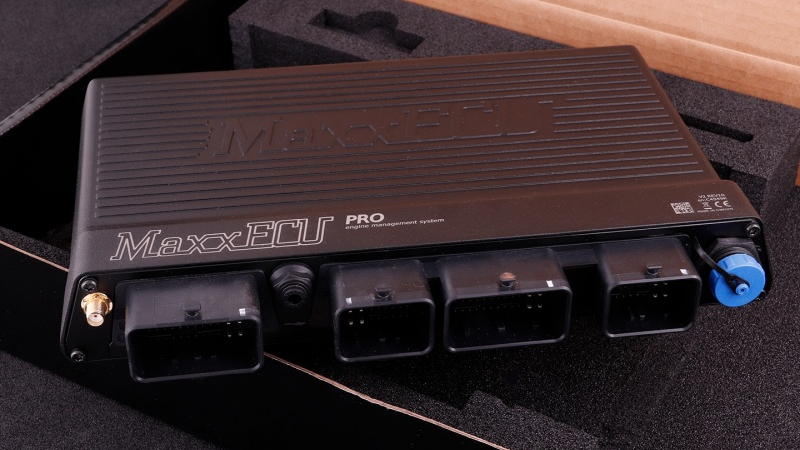
In the world of tuning and motorsport, factory engine control units (ECUs) have their limitations. In most cases, they were designed to meet emissions standards, fuel-consumption targets and be relatively inexpensive to mass-produce – not to extract the maximum potential from the engine. This is where standalone computers, such as MaxxECU, come into play.
What is a standalone ECU?
A standalone ECU is a fully independent engine management system that takes over all engine control functions – ignition, fuel injection, boost control, sensors, operating modes, and many more. It’s not just a “piggyback” ECU – it replaces it entirely. As a result, the tuner gains full freedom to configure the engine, from mild upgrades to professional motorsport builds.
How does it work?
A standalone ECU collects data from all the engine sensors and, in real time, makes decisions about fuel mixture, ignition timing, or boost pressure. Unlike a stock ECU, it allows you to create multiple separate engine maps, supports additional sensors, logs live data, and most importantly, reacts faster and more precisely. In other words, it gives complete freedom in tuning the engine.
What do standalone ECUs allow you to do?
- Precise tuning – full editing of fuel and ignition maps across the entire RPM and load range; ability to run different fuels (petrol, E85, mixtures); corrections based on temperature, pressure, altitude, etc.
- Support for mechanical modifications – larger injectors, fuel pumps, throttles, turbochargers, superchargers, aggressive camshafts, head porting, displacement changes, and much more
- Advanced boost-control strategies – boost control based on gear, speed, traction or driving mode; overboost protection; smooth boost build-up without surges
- Motorsport functions – launch control, flat-shift, anti-lag, traction and torque control
- Extensive data logging and analysis – recording hundreds of parameters in real time, easy diagnostics (overheating , lean mixture, ignition issues), ability to compare logs and optimize settings
- Integration with additional systems – displays, CAN systems, fan control, pumps, valves and accessories; ability to add sensors (eg. EGT, fuel/oil pressure, flexfuel, etc.)
- Profile and mode configuration – switching maps on the fly (eg. Eco/Street/Track/Rain), separate power setups for different drivers or conditions
- Engine protection – automatic cutoffs at excessive temperature, lean mixture, or oil-pressure drop; fail-safe strategies; recording of fault conditions
Key advantages
Standalone ECUs primarily provide full control over the engine – without factory ECU limitations. The tuner can freely adjust fuel, ignition, and boost maps, tailoring engine operation precisely to its configuration and intended use. The result is higher performance delivered predictably and safely. A huge benefit is the perfect compatibility with modifications: whether the car has larger injectors, a turbo upgrade, E85 fuel, or altered hardware, a standalone ECU can manage everything without compromise.
A standalone engine control unit can also react to threats faster and more accurately than factory systems. Excessive temperatures, lean mixtures, oil-pressure drops, or overboost trigger an immediate response – reducing power or switching to limp mode before serious damage occurs. Detailed logging then enables quick diagnostics and precise tuning, without guesswork. In practice, this means stability even in demanding track conditions, access to motorsport features, and full flexibility for future upgrades. That’s why a standalone ECU is the foundation of serious motorsport and tuning projects.